Our Mission
Cardiovascular disease (CVD) remains the leading cause of mortality worldwide, despite significant advances in medical treatments and therapeutic interventions. This suggests that current diagnostic and therapeutic strategies, including biomarkers, pharmacological agents, and coronary stents, may have reached their full potential in improving patient outcomes. With the rising prevalence of CVD and its associated healthcare costs, there is an urgent need for novel diagnostic tools and treatment modalities.
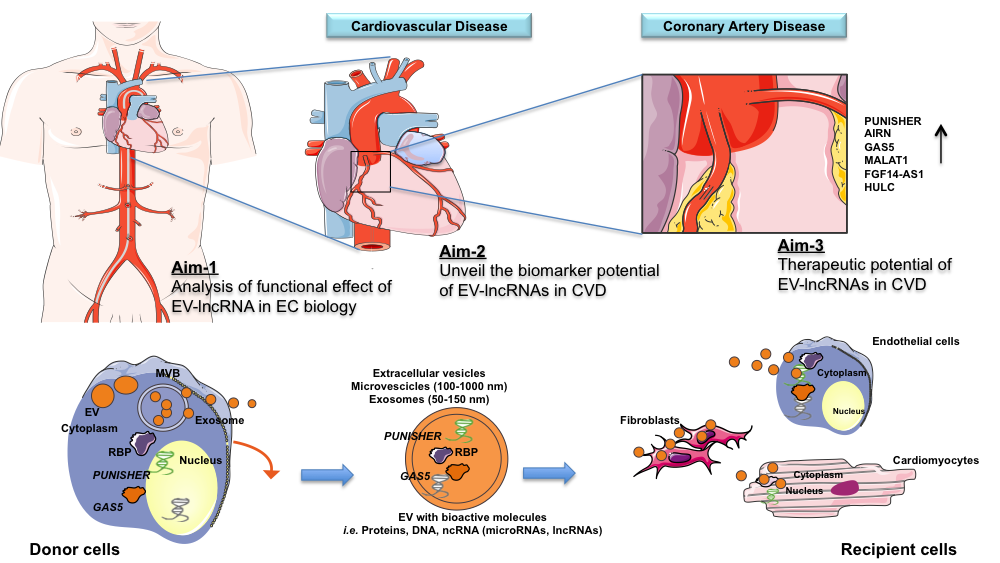
In this context, the discovery of extracellular vesicles (EVs) as mediators of intercellular communication has opened new avenues for understanding and treating CVD. Our research group has developed specialized molecular techniques to investigate how cell–cell crosstalk via EV-derived non-coding RNAs (ncRNAs) regulates cardiovascular health and disease. We have demonstrated that endothelial cell (EC)-derived EVs can prevent apoptosis in target ECs and promote vascular regeneration by transferring functional miRNA-92a or the long non-coding RNA PUNISHER into recipient cells. Importantly, we have shown that the biological effects of EVs are largely determined by their intravesicular ncRNA cargo profile.
Research Focus Areas
1. Cellular Crosstalk and Liquid Biopsies in Cardiovascular Disease
Multifactorial cardiovascular diseases, such as aortic stenosis (AS), are characterized by chronic inflammation, progressive fibrosis, and calcification of the aortic valve cusps, ultimately leading to obstructed blood flow. Emerging evidence indicates that cellular crosstalk plays a central role in this process: detrimental factors acting on the endothelial cell layer, along with paracrine signals from infiltrating immune cells, are transmitted to valvular interstitial cells (VICs), stimulating osteoblastic differentiation and tissue calcification.
Both healthy and diseased cells secrete extracellular vesicles (EVs) into the extracellular space and circulation. These EVs carry a diverse cargo—including proteins, cytokines, mRNAs, and non-coding RNAs—that can be taken up by target cells to exert either protective or pathological effects. EVs are broadly classified into two subtypes: microvesicles (MVs), which are larger (>150 nm) and bud directly from the plasma membrane, and exosomes, which are smaller (30–100 nm) and originate from the endosomal compartment.
Endothelial injury, a critical early event in atherosclerosis, triggers the release of EVs. Accordingly, cardiovascular diseases such as coronary artery disease (CAD) are associated with elevated circulating EV levels. Because EVs are present in most bodily fluids, they are easily accessible and hold great promise as biomarkers for CVD, including atherosclerosis, CAD, and calcific aortic valve disease (CAVD). Moreover, as the molecular cargo of EVs reflects specific signatures of cellular injury, they offer a unique opportunity for non-invasive diagnosis and monitoring—an approach known as “liquid biopsy.”
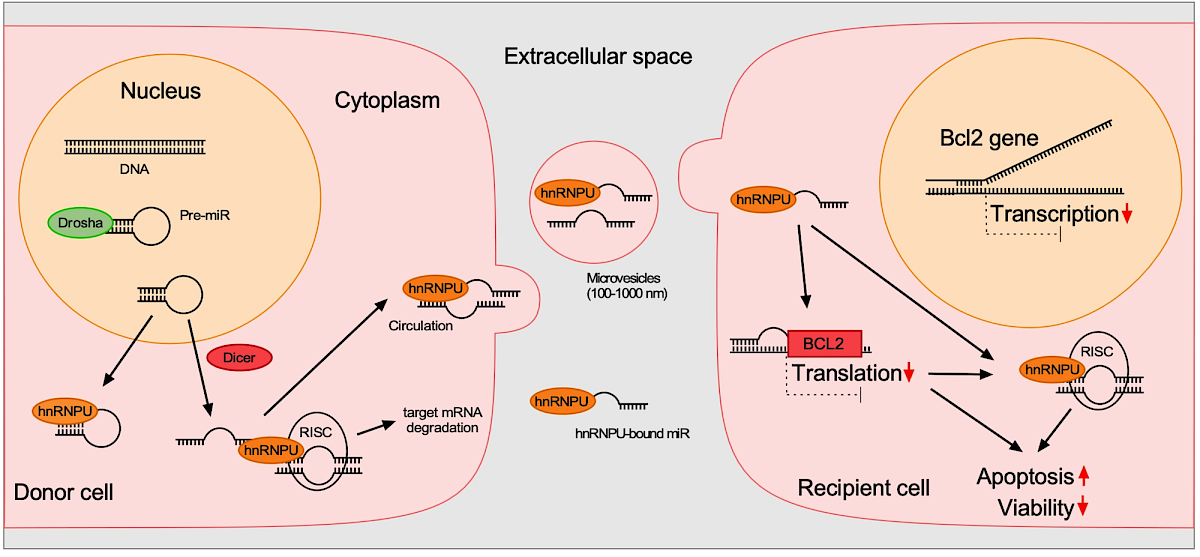
In a landmark study published in Circulation (Hosen et al., 2022) (Figure 1), we demonstrated that elevated levels of circulating EV-bound miR-122-5p are associated with a lack of improvement in left ventricular function and poor outcomes in patients with aortic stenosis following transcatheter aortic valve replacement (TAVR). Our findings revealed that miR-122-5p is shuttled to recipient cardiomyocytes via hnRNPU–miR-122-5p conjugates, where it regulates apoptotic signaling networks—including BCL2—to control cardiomyocyte apoptosis.
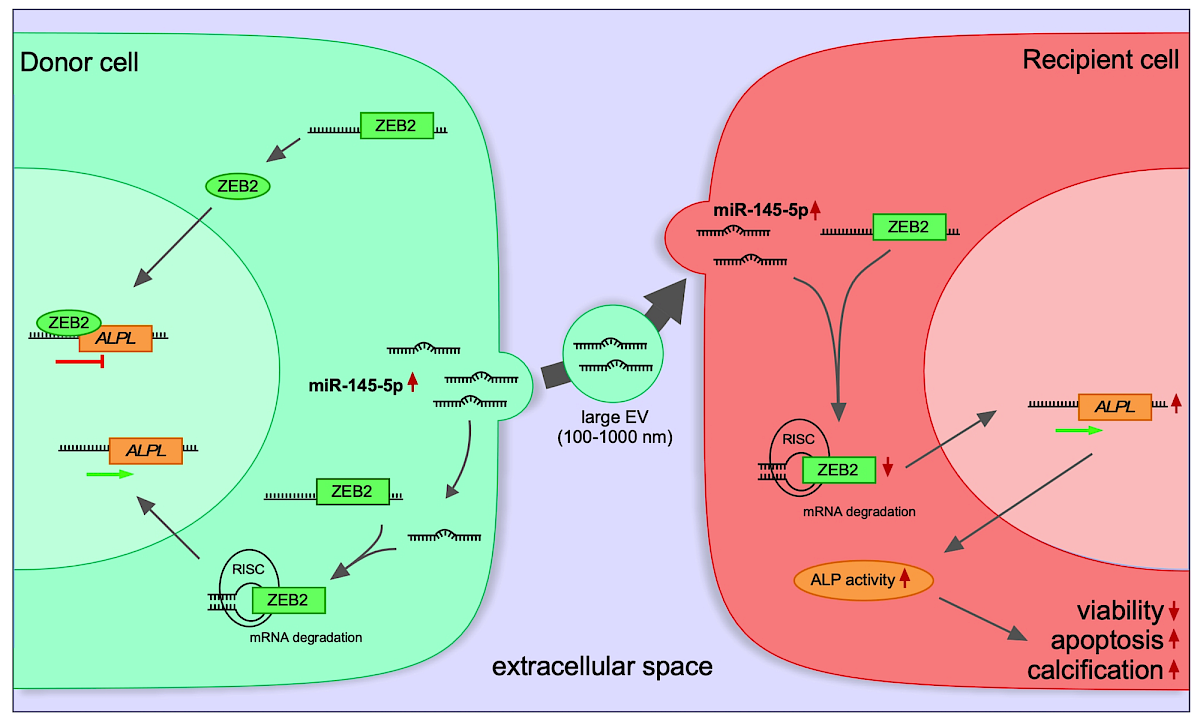
Likewise, we identified miR-145-5p as the most significantly upregulated miRNA in CAVD patients, independent of sex. This miRNA is encapsulated in extracellular vesicles (EVs) and transported to valvular interstitial cells, where it promotes calcification. Mechanistically, EV-mediated delivery of miR-145-5p suppresses ZEB2—a negative regulator of the calcification marker ALPL—by binding to its 3′ untranslated region. This activates the ZEB2–ALPL axis, driving valve calcification and disease progression. Our findings highlight EV-associated miR-145-5p as a key mediator of CAVD pathogenesis and a potential therapeutic target (Figure 2).
2. Epigenetic Regulation by Non-Coding RNAs in Cardiovascular Disease
Epigenetic regulators play a major role in the development and progression of aortic stenosis, with non-coding RNAs serving as key modulators of epigenetic phenomena, particularly in the aging population. Major epigenetic mechanisms implicated in CVD include:
- DNA methylation
- Histone modification
- RNA modification and editing
- ncRNA-mediated regulatory networks
Long non-coding RNAs (lncRNAs) can act as chromatin activators or silencers to control epigenetic gene regulatory mechanisms. Our recent RNA-seq data have revealed that circulating EV-incorporated plasma lncRNAs—including H19, AGAP2-AS1, GAS5, and AIRN—as well as intercellular lncRNAs (e.g., KCNQ1OT1, PELATON, HIF1A-AS1) isolated from tissue explants of aortic stenosis patients, are highly dysregulated.
We are currently investigating the causal roles of these molecules in the pathogenesis of aortic stenosis and other cardiovascular diseases, including atherosclerosis and coronary artery disease (CAD). This work is a major focus of our group in association with Project B04 of the Collaborative Research Center TRR 259 (Project-ID 397484323).
3. RNA Therapeutics in Cardiovascular Disease
Non-coding RNAs constitute the vast majority of the human transcriptome (>70%) and are of critical importance in regulating vascular homeostasis and disease development. Unlike protein-coding genes, ncRNAs do not translate into proteins but instead regulate cellular functions through post-transcriptional and epigenetic modulation of gene expression.
The best-characterized subclass of ncRNAs are microRNAs (miRNAs), which regulate gene expression post-transcriptionally by promoting mRNA degradation or inhibiting translation. More recently, long non-coding RNAs (lncRNAs)—ncRNAs greater than 200 nucleotides in length—have garnered significant attention due to their crucial roles as biological regulators. LncRNAs can modulate both the transcriptome and proteome of a cell by:
- Inducing epigenetic changes
- Regulating alternative splicing
- Acting as endogenous molecular sponges
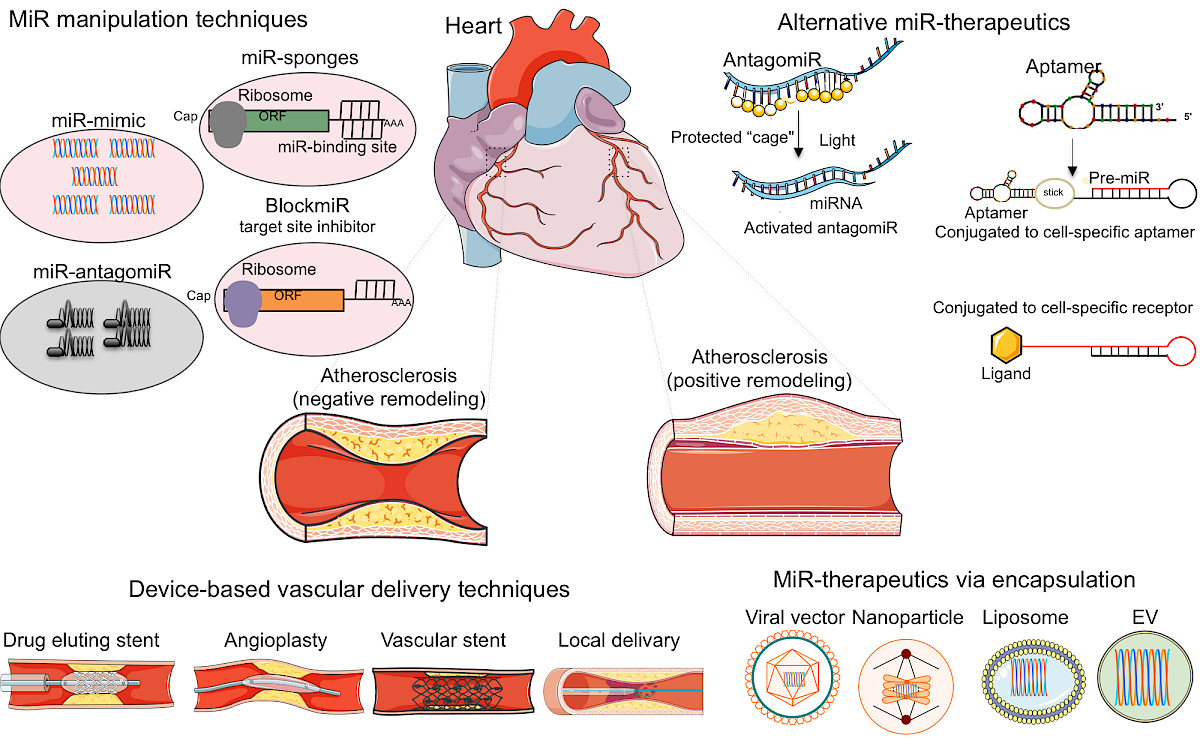
Over the past decades, a growing list of lncRNAs has been identified as playing critical roles in the development and pathophysiology of CVDs, including hypertension, CAD, myocardial infarction, ischemia, aortic stenosis, and heart failure. However, EV-encapsulated ncRNAs—released by different cell types under various pathological conditions—remain poorly investigated in the context of CVD pathogenesis. Given that ncRNAs (miRNAs, circular RNAs, and lncRNAs) are well-established regulators of gene expression, changes in their levels can modify cellular phenotypes and behavior, making them attractive targets for RNA-based therapeutics.
About Us
Group Leader
Dr. rer. nat. M. Rabiul Hosen, PhD — Independent Group Leader, Molecular Cardiology
Heart Center Bonn, University Hospital Bonn
E-Mail: Hosenmr@uni-bonn.de | Rabiul.hosen@ukbonn.de | Rabi23biotech@yahoo.com
Web: www.hosenlab.org · Publications: Google Scholar
Lab Members
PhD Students
- Juan Ignacio Muñoz-Manco, M. Sc.
- Annisa Mardianing Utami, M. Sc.
- Zhexi Li, M. Sc.
- Katharina Maus, M. Sc.
Technical Staff (BTA/MTA)
- Anna Flender, BTA
- Sarah Arahouan, BTA
MD Students
- Yunjing Sheng
- Hong Li
- Ling Zhou
- Yujia Zhang
- Yuan Zhou
- Dr. med. Monika Baumschabl
Alumni
- Dr. Katharina Maus, PhD (Germany)
- Dr. Zahra Farzaneh, PhD (Iran)
- Dr. med. Xu Xiang, MD (China)
- Dr. med. Ling Zhou, MD (China)
- Dr. med. Yangyang Liu, MD (China)
- Dr. med. Qian Li, MD (USA)
- Agnesa Mejkerei, MD (Bosnia)
- Dr. med. Atur Illie, MD (Syria)
- Sarah Arahouan (Morocco)
- Dr. med. Monika Baumschabl, MD (Austria)

Funding Organizations
- German Research Foundation (DFG)
- Corona Stiftung
- Deutsche Gesellschaft für Kardiologie (DGK)
- Deutsche Herzstiftung e.V.
- Ernst und Berta Grimmke Stiftung
- Aventis Foundation
- Boehringer Ingelheim Foundation
- German Heart Foundation (DSHF)
Collaborations
Internal Collaborations (University of Bonn)
- Dr. Mona Malek Mohammadi, Dr. Sarah Rieck, Prof. Dr. Fleischmann – Institute of Physiology
- Dr. Staffan Hildebrand, Prof. Dr. Alexander Pfeifer – Institute of Pharmacology and Toxicology
- Prof. Dr. Bernardo Franklin, Prof. Dr. Eicke Latz – Institute of Innate Immunity
- Prof. Dr. Kerstin Wilhelm-Jüngling – Endothelial Metabolism, Institute of Cardiovascular Science
- Prof. Dr. Kathrin Leppek – Clinical Chemistry and Clinical Pharmacology
- Dr. Marc Sylvester – Core Facility Mass Spectrometry, Medical Faculty
- Dr. Stefanie Heilmann-Heimbach – Institute of Human Genetics, NGS Core Facility
- Prof. Dr. med. Sebastian Zimmer, Dr. med. Philip Goody, Dr. med. Andreas Zietzer, Dr. med. Baravan Al-Kassou – Heart Center Bonn
External Collaborations (National & International)
- Prof. Dr. Steven P. Jones – Diabetes and Obesity Center, University of Louisville, KY, USA
- Prof. Dr. Joseph B. Moore – University of Louisville, KY, USA
- Prof. Dr. Shizuka Uchida – University of Aalborg, Copenhagen, Denmark
- Prof. Dr. Daniela Wenzel – Systems Biology, University of Bochum, Germany
- Dr. Ramesh Chennupati, Prof. Dr. Dr. med. Christian Jung – University Hospital Düsseldorf, Germany
- Dr. Giuseppe Militello – Yale University, CT, USA
- Dr. Tyler Weirick – RIKEN Institute, Japan
- Prof. Dr. Reinier Boon – VU University Medical Center, Amsterdam, The Netherlands
- Prof. Dr. Francesco Paneni – CTEC, University Hospital Zurich, Switzerland
- Prof. Dr. Soni Pullamsetti – Justus Liebig University, Giessen, Germany
- Prof. Dr. Stefanie Dimmeler – Institute for Cardiovascular Regeneration, University of Frankfurt, Germany
- Prof. Dr. Masanori Aikawa, Prof. Dr. Elena Aikawa – Harvard Medical School, MA, USA
Publications
Selected Publications (Category A)
- Goody, P.R., Christmann, D., Goody, D., Hildebrand, S., Billig, H., Nehl, D., Chennupati, R., Gladka, M., Wilhelm-Jüngling, K., Uchida, S. and Iris-Bibli, S., and Hosen MR#§., 2025. Calcific aortic valve disease augments vesicular microRNA-145-5p to regulate the calcification of valvular interstitial cells via cellular crosstalk. Basic Research in Cardiology, pp.1-20. IF. 9.518 (2025).
- Hosen M.R*#§., Xiang, X., Goody, P.R., Niepmann, S.T., Zietzer, Flender, Arahouan, S., Sylvester, M., Zimmer, S., Latz, E., Werner, N., Nickenig, G. and Jansen F., Circulating plasma microRNA-122 correlates with left ventricular function improvement after transcatheter aortic valve replacement and promotes the viability of cardiomyocytes via extracellular vesicles-mediated cellular crosstalk; Circulation, pp.10-1161. IF. 39.918 (2022).
- Hosen, M.R*#§., Li, Q., Liu, Y., Zietzer, A., Maus, K., Goody, P., Uchida, S., Latz, E., Werner, N., Nickenig, G. and Jansen, F., 2021. Coronary Artery Disease Increases the Long Noncoding RNA PUNISHER in Small Extracellular Vesicles and Regulates Endothelial Cell Function via Vesicular Shuttling. Molecular Therapy-Nucleic Acids. IF. 12.762 (2021).
- Nehl, D*., Nehl, D., Goody, P.R., Maus, K., Pfeifer, A., Aikawa, E., Bakthiary, F., Zimmer, S., Nickenig, G., Jansen, F. and Hosen, M.R., 2023. Human and porcine aortic valve endothelial and interstitial cell isolation and characterization. Frontiers in Cardiovascular Medicine, 10, p.1151028. IF. 5.918 (2022).
- Zietzer, A., Steffan, E. Düsing, P., Liu, W., Hosen, M.R., Jamme, P., Al-Kassou, B., Goody, P.R., Zimmer, S., Reinier, KS., Fimmers, R., Pfeiffer, A.,Böhm, M., Werner, N., Nickenig, G., and Jansen, F., 2020. Chronic kidney disease impairs microRNA-mediated vascular intercellular communication in coronary artery disease. Cardiovascular Research. IF. 10.762 (2021).
- Zietzer, A., Al-Kassou, B., Hosen, M.R., Goody, P.R., Tiyerili, V., Zimmer, S. and Schrickel, J.W., 2021. Large extracellular vesicles in the left atrial appendage in patients with atrial fibrillation—the missing link?. Clinical Research in Cardiology, pp.1-16. IF. 5.862 (2021).
- Zietzer, A*., Hosen, M.R*., Wang, H., Goody, P.R., Sylvester, M., Latz, E., Nickenig, G., Werner, N. and Jansen, F., 2020. The RNA-binding protein hnRNPU regulates the sorting of microRNA-30c-5p into large extracellular vesicles. Journal of Extracellular Vesicles, 9(1), p.1786967 IF. 25.976 (2020).
- Liu, Y., Hosen, M.R.#, Zietzer, A., Flender, A., Levermann, P., Schmitz, T., Frühwald, D., Goody, P., Nickenig, G. and Werner, N., 2019. Atherosclerotic conditions promote the packaging of functional microRNA-92a-3p into endothelial microvesicles. Circulation research, 124(4), pp.575-587. IF. 15.948 (2019).
- Militello, G., Hosen, M.R., Ponomareva, Y., Gellert, P., Weirick, T., John, D., Hindi, S.M., Mamchaoui, K., Mouly, V., Döring, C. and Zhang, L., 2018 A novel long non-coding RNA Myolinc regulates myogenesis through TDP-43 and Filip1. Journal of molecular cell biology, 10(2), pp.102-117. IF. 6.595 (2018).
- Weirick, T., Militello, G., Hosen, M.R., John, D., Moore, J.B. and Uchida, S., 2019. Investigation of RNA Editing Sites within Bound Regions of RNA-Binding Proteins. High-Throughput, 8(4), p.19. IF. 6.423 (2018).
- Hosen, M.R., Militello, G., Weirick, T., Ponomareva, Y., Dassanayaka, S., Moore IV, J.B., Döring,C., Wysoczynski, M., Jones, S.P., Dimmeler, S. and Uchida, S., 2018. Airn regulates Igf2bp2 translation in cardiomyocytes. Circulation research, 122(10), pp.1347-1353. IF. 17.862 (2018). (* First or Co-first author, # Mentoring author, § Principal Investigator, IF, impact factor)
Selected Publications (Category B)
- Chennupati, R., Solga, I., Wischmann, P., Dahlmann, P., Celik, F.G., Pacht, D., Şahin, A., Yogathasan, V., Hosen, M.R., Gerdes, N. and Kelm, M., 2023. Chronic anemia is associated with systemic endothelial dysfunction. Frontiers in Cardiovascular Medicine, 10, p.1099069. IF. 6.318 (2023).
- Goody PR, Christmann D, Goody D, Nehl D, Backer K, Wilhelm-Juengling K, Uchida S, Moore JB, Zimmer S, Bakhtiary F, Pfeifer A, Latz E, Nickenig G, Jansen F, Hosen MR§. Aortic valve disease augments vesicular microRNA-145-5p to regulate the calcification of valvular interstitial cells via cellular crosstalk. bioRxiv 2022:2022.11.29.518326. doi: 10.1101/2022.11.29.518326.
- Nehl D, Goody PR, Maus K, Pfeifer A, Aikawa E, Bakhtiary F, Zimmer S, Nickenig G, Jansen F, Hosen MR§. Porcine and human aortic valve endothelial and interstitial cell isolation and characterization. bioRxiv 2022:2022.12.01.518669. doi: 10.1101/2022.12.01.518669.
- Goody, P.R., Nachtsheim, L., Hosen, M.R., von Krosigk, M., Christmann, D., Klussmann, J.P., Zietzer, A., Breitrück, N., Jansen, F. and Jansen, S., 2022. Analysis of nocturnal, hypoxia-induced miRNAs in sleep apnea patients. Plos one, 17(3), p.e0263747. IF. 3.752 (2022).
- Düsing, P., Zietzer, A., Goody, P.R., Hosen, M.R., Kurts, C., Nickenig, G. and Jansen, F., 2021. Vascular pathologies in chronic kidney disease: pathophysiological mechanisms and novel therapeutic approaches. Journal of Molecular Medicine, pp.1-14. IF. 5.40 (2021).
- Goody, P.R., Hosen, M.R*#., Christmann, D., Niepmann, S.T., Zietzer, A., Adam, M., Bönner, F., Zimmer, S., Nickenig, G. and Jansen, F., 2020. Aortic valve stenosis: from basic mechanisms to novel therapeutic targets. Arteriosclerosis, Thrombosis, and Vascular Biology, 40(4), pp.885-900. IF. 6.604 (2020).
- Zietzer, A., Breitrück, N., Düsing, P., Böhle, S., Klussmann, J. P., Al-Kassou, B., ...Hosen, MR., Jansen, S. 2022. The lncRNA MRPL20-AS1 is associated with severe OSAS and downregulated upon hypoxic injury of endothelial cells. International Journal of Cardiology, 369, 65-68. IF. 5.604 (2022).
- Zietzer, A., Jahnel, A.L., Gutbrod, K., Hosen, M.R., Dörmann, P., Werner, N., Nickenig, G. and Jansen, F., 2022. Activation of neutral sphingomyelinase 2 through hyperglycemia contributes to endothelial apoptosis via vesicle-bound intercellular transfer of ceramides. Cellular and Molecular Life Sciences, 79(1), pp.1-20. IF. 9.78 (2022).
- Maus, K., Jansen, F., & Hosen, M.R#§. 2023. Targeting microRNA-10 in glioma; a focus with potential therapeutic application in genome editing. Molecular Therapy-Nucleic Acids, 32, 504-506. ). IF. 8.423 (2023).
- Hosen, M.R*#§., Goody, P.R., Zietzer, A., Nickenig, G. and Jansen, F., 2020. MicroRNAs as master regulators of atherosclerosis: from pathogenesis to novel therapeutic options. Antioxidants and Redox Signaling, (ja). IF. 8.423 (2020).
- (* First or Co-first author, # Mentoring author, § Principal Investigator, IF, impact factor)